
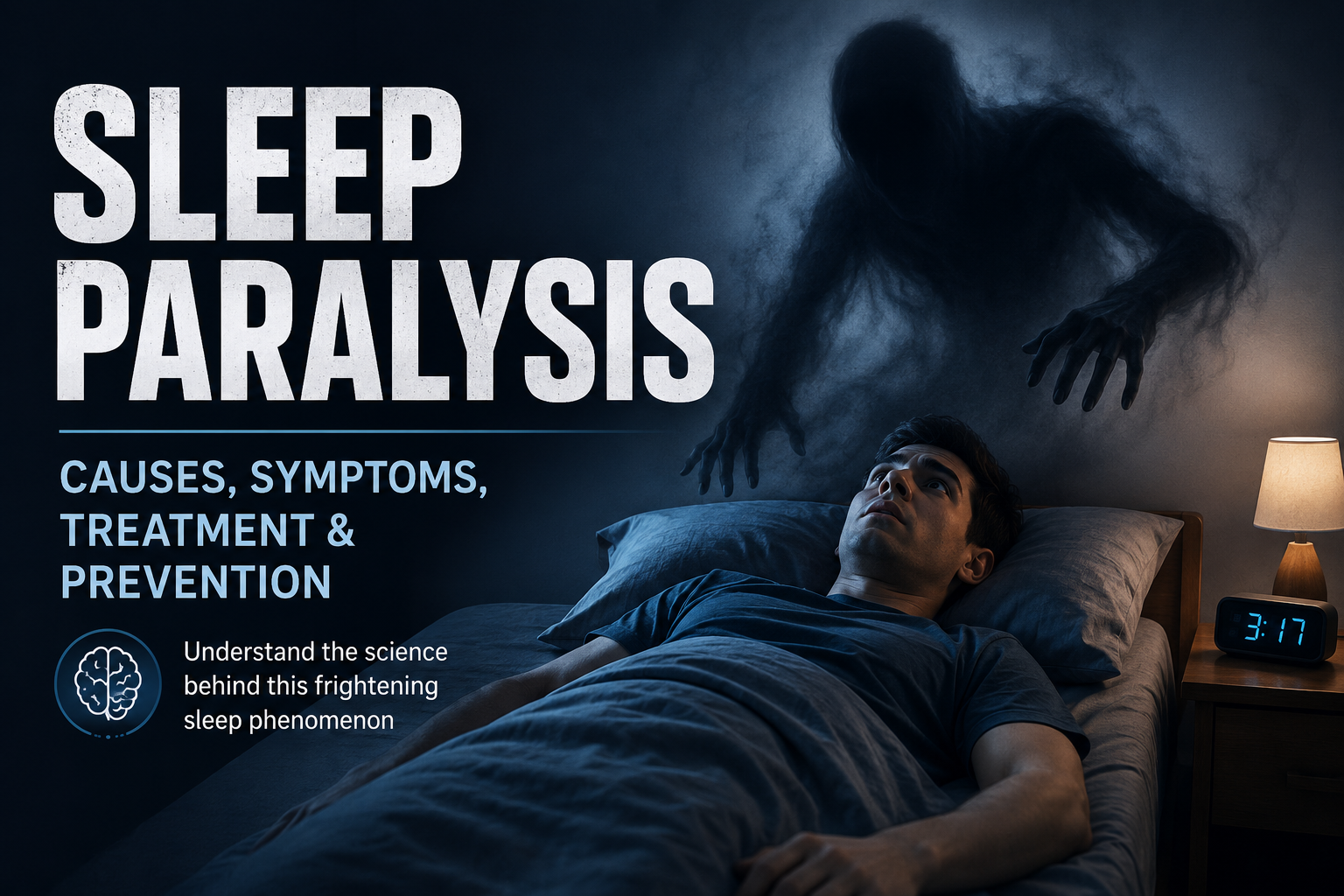
- Sleep paralysis is a short-term inability to move or speak. It happens right after falling asleep or only before waking up.
- During an episode, you are completely aware of your surroundings. You may experience hallucinations or a feeling of chest pressure.
- The exact cause is unknown. But sleep paralysis is linked to sleep disorders and certain mental health conditions.
- Imagine waking up and realising you can see your room clearly. But you can’t move your body at all. Poor sleep habits and conditions like insomnia can increase the chances of this sleep problem. It may feel like a nightmare, yet you’re awake. This unsettling experience is called sleep paralysis. Although it’s usually harmless, it can be extremely frightening. Learning what causes it and how it works can make it feel far less scary.
What Is Sleep Paralysis?
Sleep paralysis is a condition involving a temporary loss of muscle control, known as atonia. That occurs either only after falling asleep or only before waking up. According to the National Library of Medicine, atonia is a normal part of REM sleep. That prevents you from physically acting out dreams.
During a typical night of REM sleep, building good sleep hygiene habits can also help lower the risk of sleep-related problems. You experience vivid dreams. At the same time, your body remains relaxed and still. Normally, both dreaming and muscle paralysis end when you wake up. With sleep paralysis, the muscle paralysis continues briefly even though you are conscious.
Sleep paralysis is connected to REM sleep. It is classified as a REM parasomnia, a type of unusual behaviour during sleep. Research published in Frontiers in Psychology suggests. Sleep paralysis represents a mixed state of consciousness. In which features of REM sleep and wakefulness overlap? In other words, your brain wakes up, but your body hasn’t caught up yet.
Types of Sleep Paralysis
Medical professionals typically divide sleep paralysis into two main categories. As described in Sleep Medicine Reviews:
Isolated Sleep Paralysis
These are occasional episodes that are not linked to narcolepsy. A neurological disorder that disrupts the brain’s ability to regulate sleep and wake cycles.
Recurrent Sleep Paralysis
This form involves repeated episodes over time. It may be associated with narcolepsy.
When someone experiences ongoing episodes without having narcolepsy, the condition is often referred to as recurrent isolated sleep paralysis (RISP).
Symptoms of Sleep Paralysis
The main symptom of this disorder is atonia. It is the inability to move your body or speak despite being awake. Many people also report:
- Trouble breathing
- A feeling of pressure on the chest
- Panic, fear, or helplessness
- Feeling extremely tired the next day
About 75% of episodes involve hallucinations that are different from typical dreams. These hallucinations can occur as you fall asleep (hypnagogic). Or as you wake up (hypnopompic). They usually fall into three categories:
Intruder Hallucinations
A sense that someone is in the room, often perceived as threatening. These are sometimes referred to in popular culture as “sleep paralysis demons.”
Chest Pressure (Incubus) Hallucinations
A sensation of suffocation or the feeling that something is sitting on your chest. These often occur alongside intruder hallucinations.
Vestibular-Motor (V-M) Hallucinations
Sensations of movement, such as floating, flying, spinning, or out-of-body experiences.
Episodes can last from a few seconds to about 20 minutes. The average is roughly six minutes, according to the National Library of Medicine. Most episodes end on their own. But sometimes they stop if someone touches or speaks to you, or if you make a strong effort to move.
What Causes Sleep Paralysis?
There is no single known cause of sleep paralysis. Research suggests it likely results from many contributing factors.
Sleep Disorders
Sleep conditions are among the strongest predictors of the disorder. One study cited by the National Library of Medicine found that 38% of people with obstructive sleep apnea reported episodes. This sleep problem is also more common in individuals with insomnia, irregular circadian rhythms, and nighttime leg cramps.
Narcolepsy
Most people experience the disorder only once or twice, but if it starts happening regularly, there may be an underlying sleep disorder involved. One possibility is narcolepsy. This condition changes the way the brain manages sleep so that REM sleep can begin earlier than normal. As a result, some people with narcolepsy are more likely to experience repeated the disorder episodes.
While around 20% of the general population experiences occasional this disorder, episodes tend to occur more frequently in people with narcolepsy. If you notice sudden sleep attacks, excessive daytime sleepiness, or sudden muscle weakness. It is recommended to speak with a doctor
Mental Health Conditions
Emotional well-being and sleep are closely connected. If you’re going through a stressful period or living with conditions such as anxiety, panic disorder, or PTSD, your chances of experiencing sleep paralysis may be higher. While not everyone with these conditions develops sleep paralysis, poor mental health can make episodes happen more often.
Stopping alcohol use or discontinuing antidepressants can also trigger REM rebound. This may contribute to episodes. Family history may increase risk, although no specific gene has been confirmed.
Dreaming Style and Personality Traits
Some research suggests that people who frequently daydream. Or those with experience of dissociation may be more prone to this condition. Findings from the National Library of Medicine suggest possible links to vivid or lucid dreaming, though more research is needed.
Is Sleep Paralysis Dangerous?
For most people, the condition isn’t dangerous. Even though it can feel frightening in the moment, the episode usually ends on its own within a few minutes and doesn’t cause any physical harm. Many people experience it only once or occasionally during their lifetime.
One episode of sleep paralysis is usually nothing more than a frightening experience. Repeated episodes, however, can affect the way some people feel about sleep. They may stay awake longer because they’re afraid it will happen again. Over time, this can reduce the amount of quality sleep they get and leave them feeling tired during the day. Anyone dealing with frequent episodes should consider speaking with a healthcare professional.
Treatment Options for Sleep Paralysis
Although episodes can feel terrifying, these episodes is often manageable.
The following are treatment options for Sleep Paralysis:
- Focus on moving a small part of your body, like a finger or toe
- Remind yourself that the episode is temporary and not dangerous
- Take slow, steady breaths
- Focus your gaze on a fixed point
Addressing sleep or mental health issues is one of the most important steps. Conditions such as insomnia, anxiety, depression, or narcolepsy may increase risk. A healthcare provider can help to diagnose and treat these issues.
Doctors sometimes recommend cognitive behavioural therapy for insomnia (CBT-I) when poor sleep becomes an ongoing problem. Instead of relying on medication, this approach helps people recognise habits and thoughts that may be keeping them awake and replace them with healthier sleep routines. Researchers are also exploring whether a similar type of therapy could help people who experience frequent sleep paralysis, although more studies are still needed.
How to Prevent Sleep Paralysis
Since these episodes is closely connected to sleep quality. Improving sleep hygiene is one of the most effective prevention strategies.
Here are research-supported tips:
Keep a Consistent Schedule: Go to bed and wake up at the same time daily, even on weekends.
Relaxing Bedtime Routine: Wind down with a calming activity before sleep.
Improve Your Sleep Environment: Use a supportive mattress and pillow. Keep your bedroom dark, quiet, and comfortable.
Avoid Screens Before Bed: Put away electronic devices at least one hour before sleep.
Manage Stress: Practice mindfulness, journaling, therapy, or breathing exercises.
Get Enough Sleep: Most adults need 7 to 9 hours of sleep per night. Sleep deprivation increases the risk of sleep disturbances, including sleep paralysis.
Frequently Asked Questions
Conclusion
Sleep paralysis can be frightening it. But it is usually harmless and temporary. It happens when REM sleep and wakefulness overlap, leaving you aware but unable to move. Improving sleep habits, managing stress, and addressing underlying sleep or mental health conditions. It can greatly reduce the number of episodes.
If episodes are frequent, intense, or accompanied by other unusual symptoms, consult a healthcare professional. Consult a healthcare professional for evaluation and guidance.