
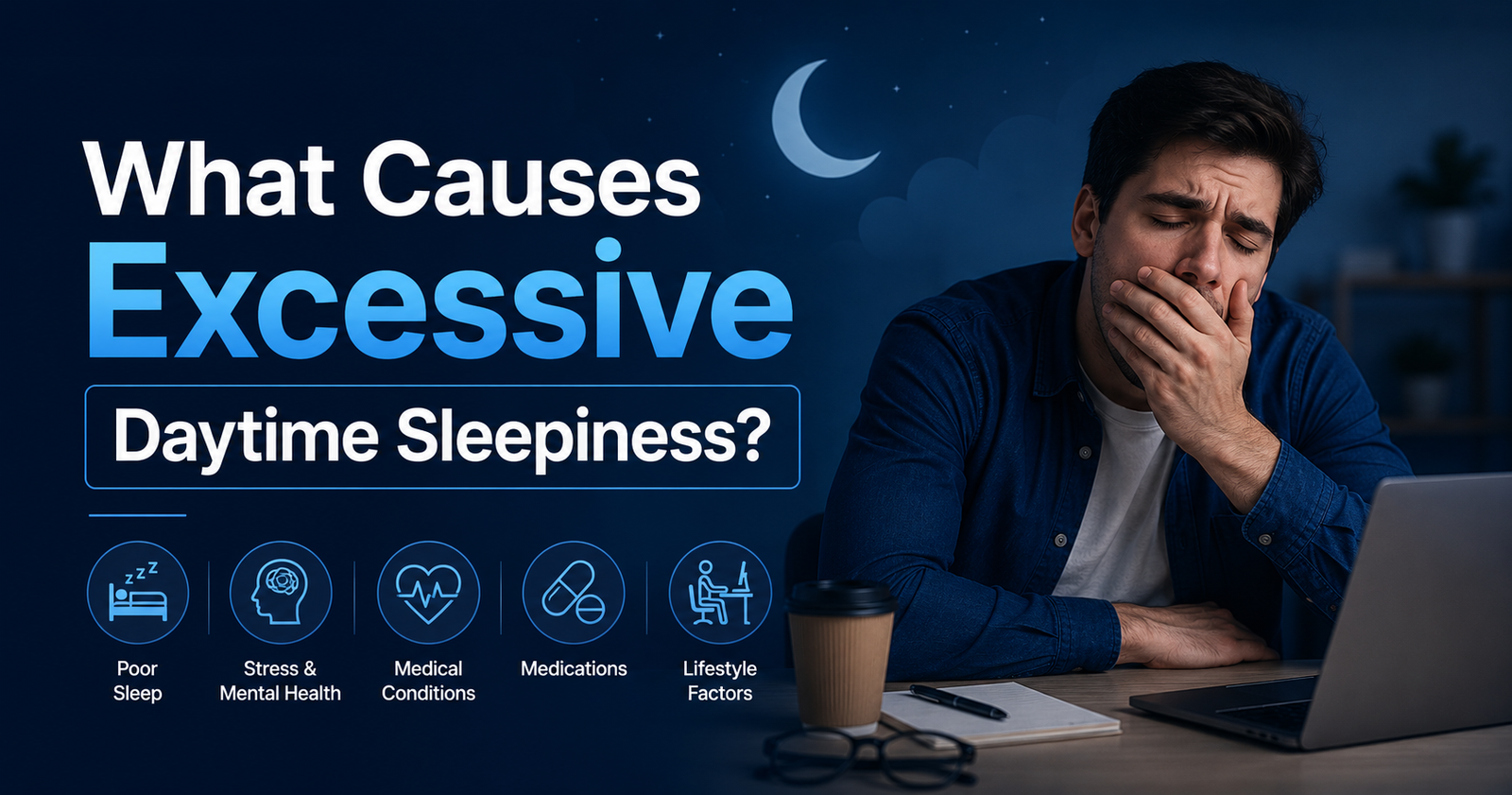
There are many excessive daytime sleepiness causes, ranging from sleep disorders to mental health conditions.
Key Takeaways:
- Conditions such as neurological disorders, mental health problems, and sleep disorders. Obstructive sleep apnea can strongly contribute to excessive daytime sleepiness.
- Some medications, especially sedatives, may also cause daytime drowsiness.
- Finding the main cause, whether it is related to lifestyle, medical issues, or brain function. Must for proper treatment and better alertness, mood, and well-being.
Feeling very tired during the day is not always only the result of staying up late. Often, it may signal an underlying health problem. Excessive daytime sleepiness (EDS) is a common symptom. That can reduce concentration, affect mood, and lower the quality of life. While sleep disorders such as sleep apnea or narcolepsy are widely known causes. Many medical, neurological, and psychological conditions can also lead to long-term drowsiness.
Understanding the real reason behind your constant fatigue. It is the first step toward effective treatment and achieving healthy, refreshing sleep again.
What Is Excessive Daytime Sleepiness?
Excessive daytime sleepiness is not a disease in itself. It is a symptom caused by another underlying issue or a mix of contributing factors. EDS is defined as difficulty staying awake, alert, or focused during the day. People with this condition often feel a strong urge to sleep at times when they should be awake and active.
Experts often separate EDS from fatigue. Fatigue usually describes intense physical or mental exhaustion. Excessive sleepiness refers specifically to the tendency to fall asleep. But these two problems can overlap in some individuals.
Recent studies show that excessive daytime sleepiness is a major public health concern. It affects up to 25% of the population. Because experts use different definitions of EDS. It can be difficult to measure exact numbers. Still, research suggests that the number of people experiencing excessive sleepiness has increased in recent years.
Conditions That Can Cause Excessive Daytime Sleepiness:
The most frequent causes of EDS include sleep deprivation and sleep disorders. Such as sleep apnea and insomnia. But mental health conditions, certain medications, and medical problems. Affecting the brain or body can also lead to daytime drowsiness.Understanding excessive daytime sleepiness causes can help you find the right treatment faster
Sleep Deprivation:
Not getting enough sleep is widely considered the most common cause of excessive sleepiness. Sleep deprivations can be short-term or long-term and may happen for many reasons.
Not prioritising sleep:
Choosing other activities over sleep. It can cause tiredness the next day. When this pattern persists for a long time, it may lead to insufficient sleep syndrome.
Poor sleep quality:
Sleep is not only about how many hours you spend in bed. It also depends on how well you move through different sleep stages. If a person does not get enough deep sleep or REM sleep, they may wake up feeling unrefreshed. Even after sleeping the recommended number of hours.
Pain:
Many painful conditions, including arthritis and fibromyalgia, can disturb sleep. Ongoing pain makes it harder to rest properly and increases the risk of daytime drowsiness.
Nighttime urination:
Waking up several times at night to use the bathroom can disrupt sleep. Some people struggle to fall back asleep afterwards, which reduces sleep quality.
Sleep Disorders:
Sleep disorders often reduce both sleep quality and quantity, leading to daytime sleepiness.
Insomnia:
This condition make it difficult to fall asleep or to stay asleep long enough. Insomnia is frequently linked to other sleep problems. That may result in excessive daytime drowsiness.
Sleep apnea:
Obstructive sleep apnea (OSA) cause repeated pauses in breathing during sleep. These pauses disturb sleep and commonly cause daytime fatigue. Central sleep apnea (CSA) is less common but can also disrupt normal sleep.
Restless legs syndrome:
This condition creates a strong urge. To move the legs, especially at night. It can interfere with total sleep time and sleep quality.
Circadian rhythm sleep-wake disorders:
When a person’s internal body clock does not match the natural day-night cycle. Sleep can become short and fragmented. Examples include jet lag and sleep problems experienced by shift workers.
Other Medical Conditions Linked to Excessive Sleepiness:
Medical conditions are also common excessive daytime sleepiness causes that are often overlooked.
Mental Health Disorders:
Around 80% of people with major depression report excessive daytime sleepiness. Bipolar disorder, post-traumatic stress disorder (PTSD), and generalised anxiety disorder. It is also connected to sleep disturbances that may lead to extreme drowsiness.
Neurological Conditions:
Narcolepsy is a well-known neurological disorder. In which the brain cannot properly control the sleep-wake cycle. People with narcolepsy may suddenly fall asleep, even in inappropriate situations.
Neurodegenerative Diseases:
Diseases such as dementia and Parkinson’s disease. It is commonly linked to sleep problems and daytime sleepiness.
Injury and Infection:
Traumatic brain injury (TBI) and concussions often lead to sleep disturbances. Brain tumours or lesions may also cause excessive sleepiness. Infections such as meningitis or other conditions. That cause brain swelling can result in EDS.
Neurodevelopmental Disorders:
Attention-deficit/hyperactivity disorder (ADHD) can create many sleep difficulties, including daytime sleepiness. Children with autism spectrum disorder often experience sleep issues. That may continue into adulthood.
Other Health Problems:
Medical conditions such as diabetes, hypothyroidism, and anaemia. It can increase the risk of daytime drowsiness. Abnormal sodium levels and electrolyte imbalances may also trigger excessive sleepiness.
Medications and Excessive Sleepiness:
Sleep loss is not the only reason people feel drowsy. Certain medications can directly cause sleepiness. Sedatives are a common example, but antidepressants, pain relievers, and over-the-counter antihistamines It. may also lead to daytime drowsiness. Additionally, withdrawal from some drugs can result in increased sleepiness.
Always discuss your medications and possible side effects with your doctor. They may adjust the timing or dosage if necessary. Never stop or change medication without professional advice.
Treatment for Excessive Daytime Sleepiness:
Most people can find relief from excessive sleepiness once the cause is identified. The best treatment plan depend on the underlying cause of the condition.
Once excessive daytime sleepiness causes are identified, treatment becomes much more effective.
It may result from lifestyle habits or medical problems. Other brain-related conditions; the treatment options vary. A doctor is the best person to determine the right approach for each individual.
If sleep deprivation is the main cause, improving sleep habits can make a big difference. For example:
- Continuous positive airway pressure therapy (CPAPT) for sleep apnea
- Cognitive behavioural therapy for insomnia (CBT-I)
- Improving sleep hygiene, including better sleep routines and bedroom environment
- Choosing a supportive mattress and pillow suited to individual needs
If excessive sleepiness is related to another medical issue. Treatment usually focuses on managing that underlying condition. At the same time, doctors often recommend healthy sleep habits to support recovery. Also, improve energy levels.