
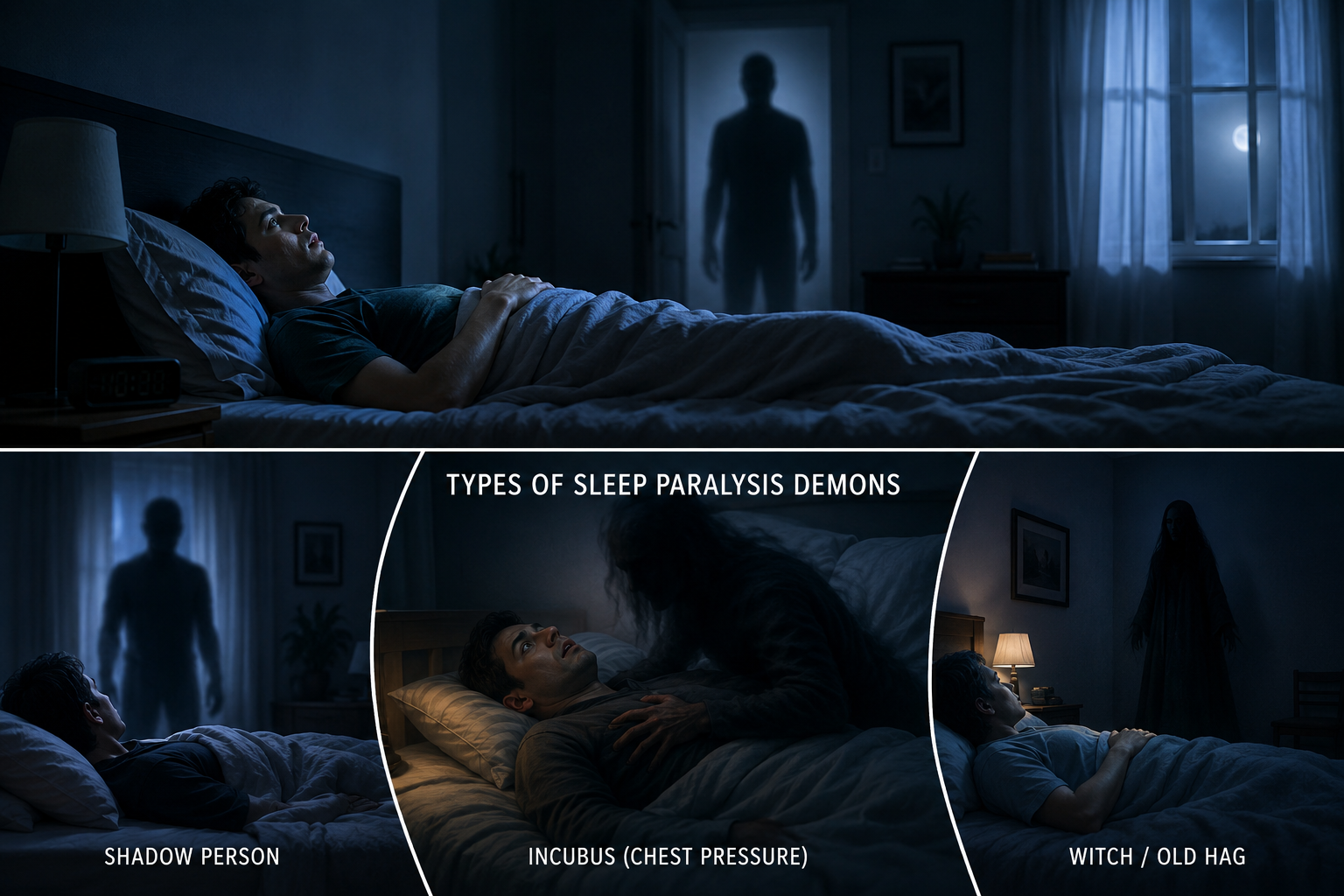
Sleep paralysis demons are intense and often frightening hallucinations. They can happen during an episode of sleep paralysis. Sleep paralysis is a temporary state in which a person cannot move their body. This can happen either when falling asleep or waking up. During this time, people may feel intense pressure on their chest. If someone threatening is in the room, or even sees a dark, shadowy figure, it is often described as a demon.
For those who experience sleep paralysis, these are the so-called sleep demons. It can feel extremely real. Around 20% of individuals report having sleep paralysis at least once in a while. In nearly 75% of these episodes, hallucinations occur. Meaning the person may hear, see, feel, or sense something in the bedroom. That is not actually present, according to the American Academy of Sleep Medicine.
Below, we explore what sleep paralysis is, how different cultures describe these shadowy figures, and what science says about them today. And a practical way to lower the risk of experiencing sleep paralysis.
What Is Sleep Paralysis?
As you begin to fall asleep, your body cycles between two main stages of sleep. The Rapid eye movement (REM) sleep and non-rapid eye movement (NREM) sleep. REM sleep is the stage during which brain activity increases. Breathing and heart rate rise, and vivid dreams or nightmares often occur.
During REM sleep, your body enters a temporary state of muscle paralysis known as muscle atonia. This natural mechanism prevents you from acting out your dreams and hurting yourself.
If you find yourself unusually tired during the day after episodes, our article on excessive daytime sleepiness covers what might be going on.
Sleep paralysis happens when the boundary between sleep and wakefulness becomes unclear. A person may become mentally awake and aware of their surroundings. But the muscle paralysis induced by REM sleep persists only briefly. It lasts anywhere from a few seconds to several minutes. During this period, they can think, breathe, and see, but they cannot move their body.
Lack of sleep is one of the most common triggers. Sleep paralysis occurs without any other medical condition involved. It is referred to as isolated sleep paralysis.
What Is a Sleep Paralysis Demon?
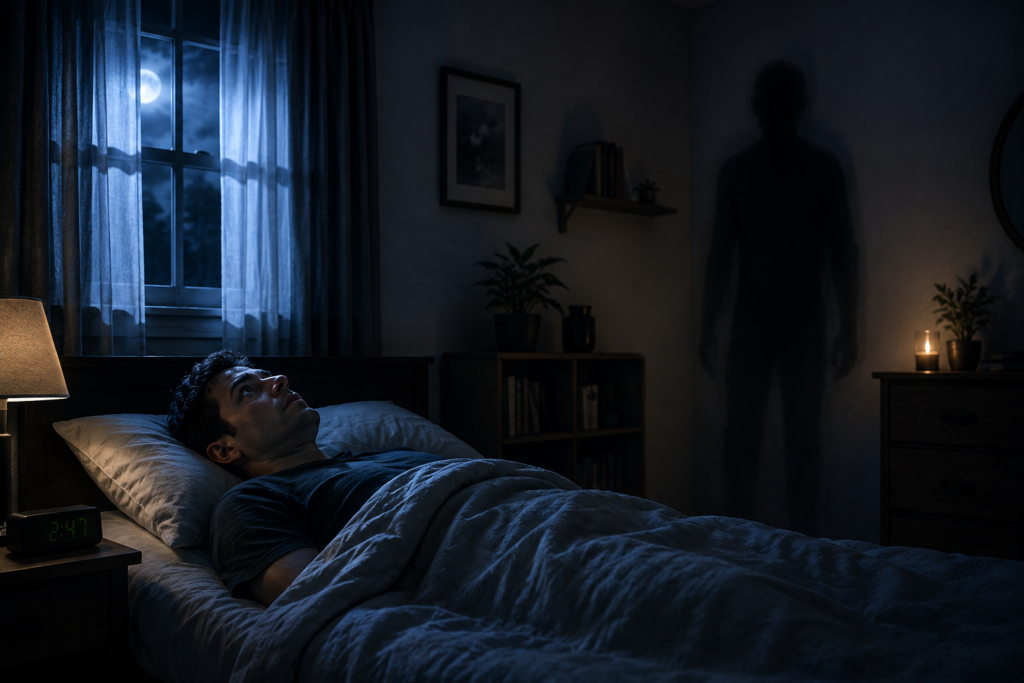
Sleep paralysis includes hallucinations. People may begin to see, hear, or feel things that do not exist in reality. These experiences are commonly labelled as sleep paralysis demons.
During this period, chest pressure is common, and so is the feeling that something in the room is watching you. Dark, human-like shapes sometimes appear. Because these figures tend to feel threatening, people naturally reach for explanations — demons, ghosts, intruders. What science actually points to is simpler but no less unsettling: the brain is trying to make sense of being conscious while part of it is still dreaming.
Types of Sleep Paralysis Demons
Hallucinations:
Not every sleep paralysis episode looks the same. Some people see a shadowy figure standing in the corner. Others feel something pressing down on their chest. Researchers have noticed these experiences tend to fall into a few recognisable patterns.
The Intruder
This is probably the most commonly reported one. You become aware that something is in the room with you — standing in the corner, near the bed, or moving closer. You cannot see it clearly, but the sense that it is there and that it means harm is overwhelming.
The Incubus
This type includes the feeling of heavy pressure on the chest. As though someone is sitting or lying on top of the body. It is often associated with difficulty breathing and strong fear.
The Shadow Person
These are dark, faceless shapes that seem to move around or observe the sleeper. Even without direct interaction, their presence often triggers intense fear.
The Witch or Old Hag
In folklore and historical accounts, some individuals describe seeing an elderly figure. It is like a figure sitting on their chest or standing nearby. This image appears frequently in cultural stories about sleep paralysis.
Dreams vs Hallucinations
It can be difficult to tell the difference between dreams and sleep paralysis. But there are key differences:
Awareness:
During sleep paralysis, individuals usually know they are awake. In contrast, dreamers typically do not realise they are asleep.
Location:
Dreams can take place anywhere, often in unfamiliar settings. Sleep paralysis hallucinations usually occur in the person’s real bedroom environment.
Emotional Intensity:
Although some sleep paralysis episodes can be neutral. Or even pleasant, up to 90% of hallucinations involve fear. By comparison, only about 30% of dreams are considered frightening
Memory:
Many dreams fade fast after waking. Sleep paralysis hallucinations are often remembered clearly and in vivid detail.
What Causes Sleep Paralysis Demons?
The exact cause of these hallucinations is not fully understood. Many researchers believe they occur when a person experiences REM dream activity while consciously awake.
Several possible factors have been studied:
Serotonin Activity
As you wake up, hormones such as serotonin help suppress REM sleep and increase awareness. During sleep paralysis, serotonin may be released. While REM sleep continues, it potentially triggers hallucinations. This activates fear-related areas of the brain.
Brain Disturbances
Disruptions in parts of the brain responsible for forming body images. It may contribute to the appearance of human-like figures. These disturbances may also explain phantom sensations and limb pain. Or even the sexual content sometimes reported in hallucinations.
Breathing Changes
During REM sleep, breathing becomes shallower. If a person becomes aware of this reduced breathing during sleep paralysis. It may create the sensation of suffocation. Or chest pressure associated with the incubus experience.
Fear and Panic Cycles
The moment you realise you cannot move, things tend to get worse fast. The fear kicks in, your body goes into full alarm mode, and that response seems to feed directly back into the hallucination. What might have started as an uneasy presence in the room can quickly feel like something actively dangerous. The panic and the experience keep pushing each other.
How Can You End a Sleep Paralysis Episode?
Learning how to interrupt an episode can be an effective coping strategy. Some methods that may help include:
- Trying to move small body parts like fingers, toes, or facial muscles
- Attempting to move the eyes or mouth
- Being gently touched by another person
- Waking up to an alarm
- Focusing on calming thoughts and steady breathing
- Repeating a calming phrase, prayer, or mantra
Some researchers also suggest learning lucid dreaming techniques. It may help individuals gain more control during episodes, although further research is needed. The lucid dreaming skills may reduce fear. And transform frightening experiences into more neutral ones.
How to Prevent Sleep Paralysis Demons
Sleep paralysis treatment involves addressing triggers and improving sleep habits.
Learn About Sleep Paralysis
Understanding what happens in your body during an episode can reduce fear. Many people feel less anxious. Once they realise the hallucinations are vivid but harmless.
Manage Anxiety
Anxiety can increase sleep disturbances, and sleep paralysis itself can raise anxiety levels. Speaking with a healthcare provider and mental health professional. It may help break this cycle.
Practice Relaxation
Relaxing before bed can improve sleep quality. It may reduce the likelihood of episodes.
Change Sleep Position
Some research suggests that sleeping on your back It may increase the frequency of episodes. Trying to sleep on your side or stomach may reduce the number of occurrences.
Improve Sleep Hygiene
Bad sleep and sleep paralysis tend to go hand in hand. Getting to bed at the same time each night, having some wind-down routine, and keeping caffeine and screens out of the hours before bed — none of it is complicated, but most people skip it. Those small things matter more than they seem. For a full breakdown of habits that actually help, check out our guide on sleep hygiene.
Keep a Sleep Journal
When episodes keep coming back, a journal helps you figure out why. Write down when it happened, what the night looked like, whether you were stressed or sleep-deprived. After a few weeks, the picture usually gets clearer. It is also something concrete to bring to a doctor instead of just saying it keeps happening. Our Sleep Calculator can help you figure out whether you are consistently falling short on sleep.
Consider Cognitive-Behavioral Therapy
CBT addresses the problem from multiple angles at once — sleep habits, how you respond during an episode, and ways to mentally interrupt one before it spirals. For people who get episodes regularly and find them genuinely distressing, it is worth bringing up with a healthcare provider rather than just waiting for things to improve on their own.