
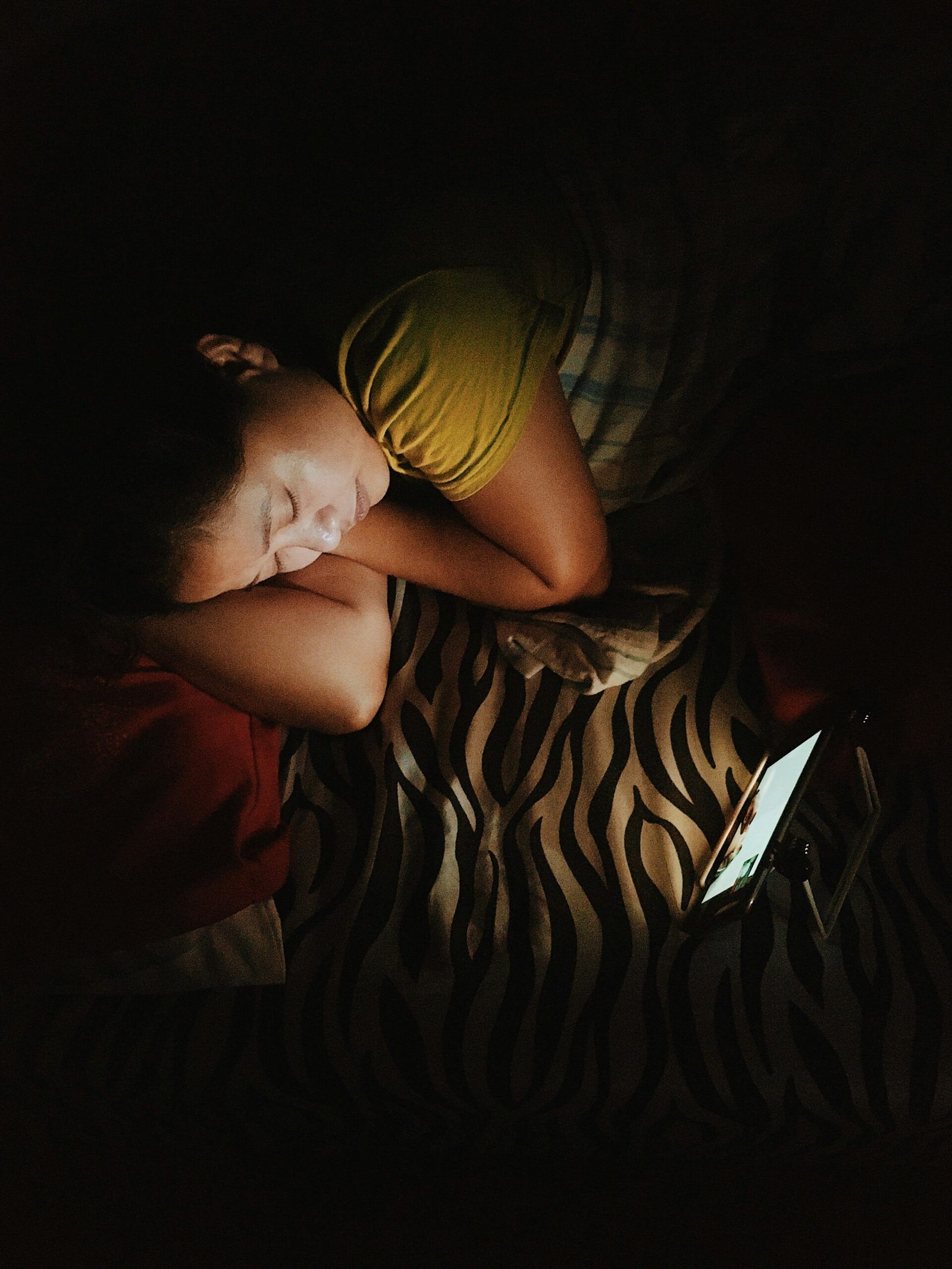
In today’s world, most of us cannot imagine going to bed without scrolling through our phones. Whether it’s social media, YouTube, or just checking messages — we do it every night. But did you know that this habit is one of the biggest reasons for poor sleep?
How Blue Light Affects Your Sleep
The screen of your phone emits blue light. This blue light signals your brain that it is still daytime. As a result, your brain stops producing melatonin — the hormone that makes you feel sleepy. Without enough melatonin, falling asleep becomes very difficult, even when you are physically tired.
Mental Stimulation Before Bed
Scrolling through social media or watching videos keeps your brain mentally active and stimulated. Your mind becomes busy processing information, emotions, and reactions. This makes it very hard to relax and fall asleep naturally.
How to Fix This
- Put your phone away at least 30 minutes before bed
- Use night mode or blue light filter after sunset
- Charge your phone outside the bedroom
- Replace phone time with reading a book or light stretching
- Use an alarm clock instead of your phone
The 30-Day Phone Detox Plan
Week 1: Stop using phone 15 minutes before bed
Week 2: Increase to 30 minutes before bed
Week 3: Move phone charger outside bedroom
Week 4: Replace phone habit with a relaxing routine
Conclusion
Your phone is not your enemy — but using it before bed is hurting your sleep quality. Small changes in your evening routine can make a huge difference. Try putting your phone away tonight and see how much better you sleep.