
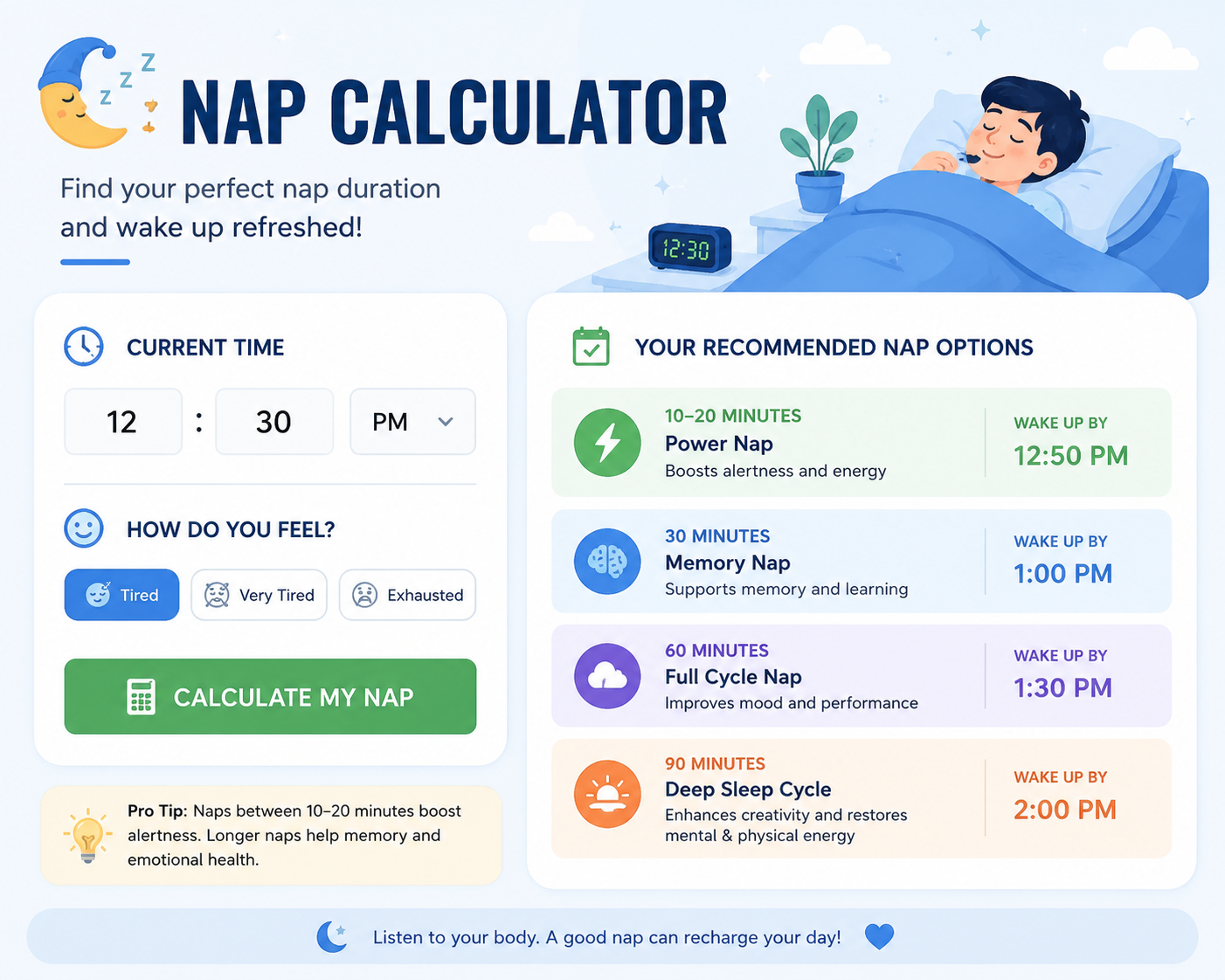
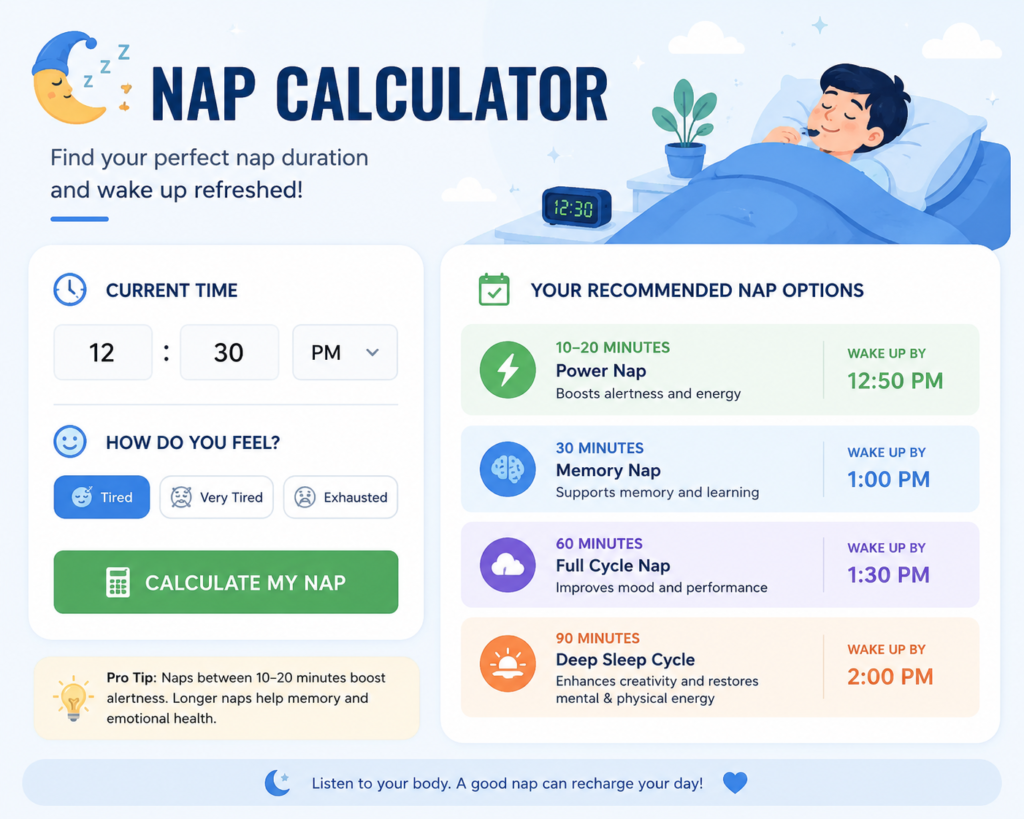
A nap calculator is a tool that helps you determine the best time to wake up. After a nap based on your desired nap length or natural sleep cycles. Instead of waking up feeling groggy. A nap calculator helps you wake during a lighter stage of sleep, improving alertness, focus, and energy.
Whether you’re a student, office worker, shift employee, athlete, or parent, taking naps the right way. It can improve productivity, memory, mood, and overall health. Our complete sleep guide covers exactly how to fix it
What Is a Nap Calculator?
A nap calculator is an online tool that calculates your ideal wake-up time after you fall asleep.
1. Sleep Cycles
It usually works in two ways:
- If you enter the current time, we tell you when to wake up.
- When you choose your desired wake-up time, it suggests when to start your nap
Some of the advanced calculators also use 90-minute sleep cycles.
How Does a Nap Calculator Work?
The calculator uses two important factors:
A normal sleep cycle lasts approximately 90 minutes.
Each cycle includes:
- Light Sleep
- Deep Sleep
- REM Sleep
If the waking during light sleep helps you feel refreshed.
2. Time Needed to Fall Asleep
Most people take around 10–20 minutes to fall asleep.
Many nap calculators automatically include about 15 minutes for sleep onset.
Example:
Current Time:
2:00 PM
Sleep Onset:
15 Minutes
30-Minute Nap
Wake Time:
2:45 PM
Why Use a Nap Calculator?
Using a nap calculator helps you:
- Improve concentration
- Increase productivity
- Reduce fatigue
- Improve memory
- Boost creativity
- Enhance mood
- Reduce stress
- Improve athletic performance
- Avoid waking up groggy.
Best Nap Lengths
10–20 Minute Power Nap
Benefits:
- Quick energy boost
- Better focus
- Increased alertness
- Minimal sleep inertia
Best for:
- Office workers
- Students
- Busy professionals
30-Minute Nap
Benefits:
- More relaxation
- Slight memory improvement
Downside:
Then wake up feeling groggy, it may be because you enter deeper sleep.
60-Minute Nap
Benefits:
- Improves memory
- Helps learning
- Better information retention
Downside:
Can cause temporary grogginess.
90-Minute Nap
Benefits:
- Completes one full sleep cycle
- Includes REM sleep
- Improves creativity
- Better emotional processing
- Less grogginess
Ideal for:
- Athletes
- Night-shift workers
- Sleep-deprived individuals
Best Time to Take a Nap
Experts recommend taking naps between:
1:00 PM and 3:00 PM
This matches the body’s natural afternoon energy dip.
Avoid naps after:
4:00 PM
Late naps may interfere with nighttime sleep.
Benefits of Healthy Napping
Better Brain Function
Naps improve:
- Memory
- Learning
- Decision making
- Problem solving
Increased Productivity
Even a 20-minute nap can improve work performance.
Improved Mood
Short naps help reduce:
- Stress
- Irritability
- Mental fatigue
Better Physical Performance
Athletes often use naps to improve:
- Reaction time
- Recovery
- Endurance
Heart Health
Some research suggests regular short naps may reduce stress levels and support cardiovascular health when combined with healthy sleep habits.
How to Use a Nap Calculator
Step 1
Enter the current time.
Step 2
Choose your desired nap length.
Example:
- 20 minutes
- 30 minutes
- 60 minutes
- 90 minutes
Step 3
Add approximately 15 minutes to fall asleep.
Step 4
Wake up at the suggested time.
Example Nap Schedule
Nap Start Time
Nap Duration
Recommended Wake-Up Time
1:00 PM
20 min
1:35 PM
2:00 PM
30 min
2:45 PM
3:00 PM
60 min
4:15 PM
1:30 PM
90 min
3:15 PM
Tips for the Perfect Nap
- Keep naps under 30 minutes for quick refreshment.
- Nap in a quiet, dark, and cool room.
- When setting an alarm before sleeping.
- They can avoid caffeine immediately before your nap unless trying a “coffee nap.”
- Use an eye mask if needed.
- Turn off notifications.
- Lie down comfortably.
- Therefore, nap consistently if it fits your schedule.
Common Nap Calculator Mistakes
Many people:
- Sleep too long.
- Nap too late in the day.
- Forget to set an alarm.
- Ignore sleep cycles.
- First of all the wake-up during deep sleep.
- If you also depend on naps instead of getting enough nighttime sleep.
Who Should Use a Nap Calculator?
A nap calculator is useful for:
- Students
- Office workers
- Remote employees
- Shift workers
- Parents
- Travelers
- Athletes
- Medical professionals
- Drivers on long trips (after stopping in a safe place)
- Anyone looking to improve daytime alertness.
Frequently Asked Questions (FAQs)
Conclusion
A nap calculator is a practical tool for planning with naps that leave you feeling refreshed rather than groggy. Accounting for sleep cycles and the time. To sum up, the time it takes to fall asleep can help improve your focus, productivity, memory, and overall well-being.
They summary, pairing a nap calculator with healthy sleep habits, such as maintaining a regular sleep schedule and avoiding late-day naps. It can help you get the most benefit from daytime rest.