

Getting a full, restful night’s sleep is vital for health and daily performance. Quality sleep refreshes both the body and mind. It helps you feel energised and ready to handle tasks the next day. Experts describe good sleep in both quantity and quality. Meaning you get enough hours of rest (not too little and not excessive). And you can fall asleep easily and stay asleep without frequent interruptions.
But many individuals struggle to achieve the recommended amount of sleep. Or wake up repeatedly during the night. According to the Centres for Disease Control and Prevention (CDC), more than one-third of adults in the United States do not get enough sleep. About 14.5% report difficulty falling asleep, while 17.8% have trouble staying asleep. Practising good sleep hygiene can significantly improve these issues.
What Is Sleep Hygiene?
Sleep hygiene refers to healthy habits, behaviours, and environmental practices. Those that promote consistent, high-quality sleep. When you sleep well, your body carries out essential repair and maintenance processes. It strengthens the immune system and restores emotional balance and mental clarity.
Good sleep hygiene includes:
- Creating a bedroom environment that is comfortable and free from disturbances
- Maintaining a consistent sleep schedule. That is seven to nine hours per night for most adults.
- Creating a simple bedtime routine that helps you relax before going to sleep. Small habits like reading a book, taking a warm shower, or listening to calming music can make it easier to fall asleep.
- What you do during the day matters too. Staying active, getting some daylight, and avoiding too much caffeine late in the day can all lead to better sleep at night.
- Not every tip works the same way for everyone. Try different habits, keep the ones that help, and build a routine that fits your lifestyle.
- Traditionally, experts have advised going to bed and waking up at the same time every day, even on weekends. At the same time, regular sleep patterns are ideal. A 2023 consensus statement from the National Sleep Foundation. It suggests that if you experience sleep loss during the week. Moderate catch-up sleep on weekends may offer some benefit.
- There isn’t one sleep schedule that works for everyone. Children, adults, and older people all have different sleep needs. The CDC offers general guidelines based on age, but your ideal amount of sleep can also depend on your health, daily routine, and how rested you feel when you wake up.If you’re unsure when you should go to bed or wake up, try our Sleep Calculator to find the best sleep schedule for your routine.
Practical Tips for Better Sleep
A peaceful and supportive sleep environment. It can make it easier to fall asleep and stay asleep. Daily habits, especially what you eat and drink, also influence sleep quality.
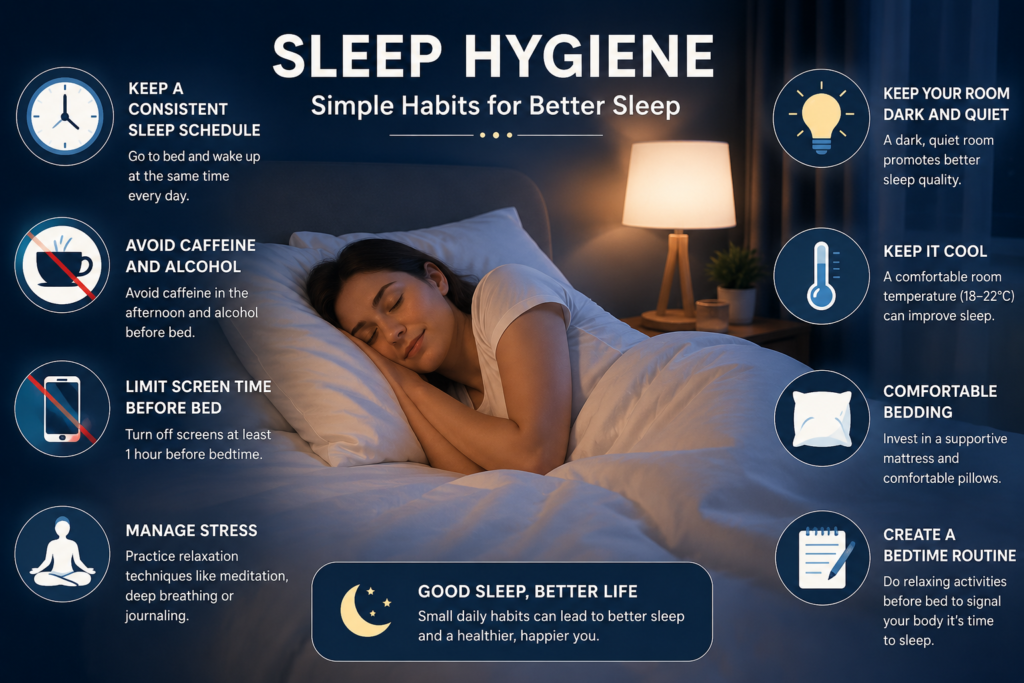
Build a Comfortable Sleep Environment
- Take a look around your bedroom. If it doesn’t feel calm and comfortable, falling asleep can become harder than it should be. You don’t need an expensive makeover either. A few simple changes are often enough.
- If traffic, neighbours, or other sounds keep you awake, try reducing the noise with thick curtains, a rug, or even a white noise app.
- A dark room usually makes it easier to sleep. If light comes through the windows at night or early in the morning, blackout curtains are worth considering.
- An old mattress or flat pillow can leave you feeling sore when you wake up. If yours has seen better days, replacing it may improve your sleep.
- Many people find it easier to sleep when the bedroom is slightly cool rather than warm.
- Try to keep the bedroom for sleeping instead of working or spending hours on your phone. Over time, your brain starts linking that space with rest.
- If children or pets wake you during the night, giving everyone their own sleeping space can lead to fewer interruptions.
- Finally, clear away anything that reminds you of work. A tidy, peaceful room makes it easier to switch off at the end of the day.
Avoid Sleep Disruptors
- Evening habits play a major role in sleep quality:
- Eat dinner at least three hours before going to bed.
- Avoid alcohol at night. At first, it may make you feel sleepy. It later acts as a stimulant. It increases awakenings and reduces REM sleep. REM sleep is essential for mental health and cognitive performance.
- Limit caffeine after lunch if it affects your sleep.
- Avoid nicotine, as it is a stimulant that can disrupt nighttime rest. It can also cause other harmful health effects.
Develop a Relaxing Bedtime Routine
Set aside about an hour before bed to unwind. Step away from stressful or stimulating activities. Helpful calming practices include:
- Turning off electronic devices (unless using them for relaxing music or guided meditation)
- Reading something enjoyable in soft lighting
- Taking a warm bath
- Doing gentle stretches, progressive muscle relaxation, or deep breathing exercises
Addressing Common Sleep Challenges
Your daytime activities directly impact your sleep at night. Small adjustments can help align your routine with healthy sleep patterns.
Exercise and Naps
Regular exercise can help you sleep better, but the timing doesn’t work the same for everyone. Some people have no trouble sleeping after an evening workout, while others find it keeps them awake for longer than usual. If you think late exercise is affecting your sleep, try moving your workout to earlier in the day and see if it makes a difference. Naps can also affect your bedtime. A short nap may help you feel refreshed, but sleeping for too long or too late in the afternoon can make it harder to fall asleep at night. For most people, keeping naps to around 20 to 30 minutes works best.A healthy body can also contribute to better sleep. If you want to check whether your weight is in a healthy range, try our BMI Calculator.
Keep a Sleep Diary
Maintain a sleep journal for at least 2 weeks. It can help identify patterns that affect your sleep. Record:
- Your bedtime and wake-up time
- Any medications taken
- Caffeine and alcohol intake (including timing and amount)
- Dinner timing and late-night snacks
- Exercise timing and duration
- When you stop using electronic devices
Each morning, note how long you slept, how restful it felt, whether you woke during the night, and for how long. Reviewing this information can reveal habits that may be interfering with sleep quality.
Work Together for Better Sleep
Changing routines can be challenging, especially when done alone if you share your home with a partner or roommates. Supporting one another in building consistent sleep habits. It can make it easier to maintain long-term improvements.
If you’re working on improving both your sleep and overall health, our Fat Loss Calculator can help you estimate your daily calorie needs and support your fitness goals.