
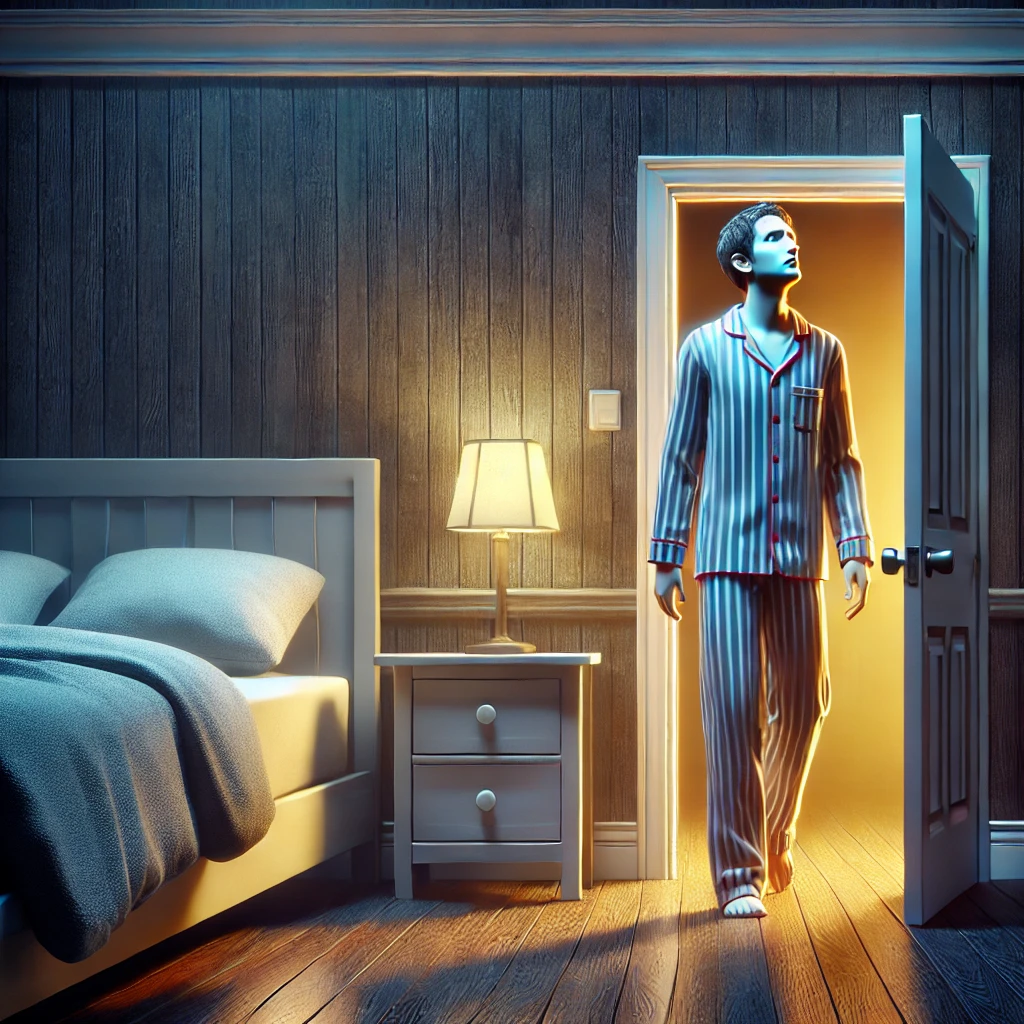
- During a sleepwalking episode, a person may walk around or do other things without being fully awake.
- Both kids and adults can experience it, though it shows up far more often in childhood.
- Genetics, poor quality sleep, stress, and some medications are among the things that can trigger it.
- Reducing safety hazards, securing doors, and consulting a doctor are all important steps if sleepwalking occurs.
Sleepwalking, medically known as somnambulism, is a sleep-related behaviour disorder that begins during deep sleep and causes a person to walk or perform other complex behaviours while still mostly asleep. Although it can occur at any age, it is more common in children than in adults, and the risk increases if there is a family history of sleepwalking or if someone is sleep-deprived or frequently wakes up at night.
Sleepwalking episodes can sometimes lead to accidents and injuries. People who sleepwalk may also experience poor-quality sleep and feel very sleepy during the day. Many individuals do not need active treatment, especially if episodes are rare, but if sleepwalking happens often or becomes severe, several treatment approaches can help.
Is Sleepwalking a Sleep Disorder?
Yes, walking is classified as a type of parasomnia. Parasomnias are unusual behaviours that occur during sleep, existing in a state between being fully asleep and fully awake, which explains why behaviours during these episodes can seem strange or inappropriate.
Parasomnias are grouped according to the stage of sleep in which they occur. Sleepwalking occurs during non-rapid eye movement (NREM) sleep, especially during stage 3 (deep sleep), placing it in a category known as NREM disorders of arousal, along with sleep talking, confusional arousals, and sleep terrors.
What Are the Symptoms of Sleepwalking?
Despite its name, sleepwalking does not only involve walking. Episodes may include simple or complex behaviours and can last from a few seconds up to 30 minutes. An episode usually ends when the person either wakes up feeling confused or returns to bed without realising what happened.
Possible behaviours during an episode include:
- They might walk around, or in some cases even run
- The eyes often stay open, with a glassy, blank look on the face
- Speech can come out confused or hard to understand
- Sometimes they’ll go through routine motions — getting dressed, moving furniture around
- In rarer cases, sexual behaviour occurs (known as sexsomnia)
- Urinating somewhere other than the bathroom is also possible
A key feature of sleepwalking is that the person rarely remembers the episode upon waking. Because of this, most people learn about their sleepwalking from family members or roommates.
Sleepwalking episodes usually happen in the first half of the night, when people spend more time in deep NREM sleep, the stage most closely linked to these behaviours.
How Common Is Sleepwalking?
It is difficult to determine the exact number of people affected, because most sleepwalkers do not remember their episodes, and research studies sometimes define sleepwalking differently.
A large review of 51 studies found that around 5% of children and 1.5% of adults experienced at least one sleepwalking episode within the previous year, confirming that sleepwalking is much more common in children than in adults.
What Are the Dangers of Sleepwalking?
Sleepwalking can sometimes lead to serious consequences. Injuries may occur if a person trips, falls, or bumps into objects while walking or running, and handling sharp items or attempting to drive a vehicle during an episode can be extremely dangerous.
In some cases, behaviours may become aggressive or violent, which could harm the sleepwalker or others nearby. Episodes may also cause embarrassment, especially if they involve sexual actions, shouting, or urinating in the wrong place.
Research shows that people who sleepwalk often report higher levels of daytime sleepiness and insomnia symptoms. However, it is unclear whether sleepwalking directly causes these issues or whether an underlying sleep problem contributes to both.
Sleepwalking can also affect partners, roommates, or family members. Their sleep may be disturbed, and they may feel stressed or concerned about safety during episodes.
What Causes Sleepwalking?
Sleep specialists believe sleepwalking usually occurs when someone partially wakes from deep sleep but remains mostly asleep. Several factors can increase the likelihood of this partial awakening:
Genetics and Family History
Sleepwalking tends to run in families — the evidence for this is pretty strong. Kids with no family history of it still have around a 22% chance of sleepwalking themselves. But that number jumps noticeably once a parent is involved: 47% if one parent sleepwalked, and it climbs even further to 61% when both parents have a history of it.
Sleep Deprivation
Not getting enough sleep increases the time spent in deep sleep, which may raise the chances of a sleepwalking episode. If your schedule’s been inconsistent, our Sleep Calculator can help you find a bedtime that actually fits your natural sleep cycle.
Medications
Certain sedative medications can alter sleep patterns and make episodes more likely.
Alcohol
Especially when it’s had in the evening, alcohol throws off the normal stages of sleep — and that alone can make sleepwalking more likely.
Brain Conditions
Sometimes it comes down to something happening in the brain itself. An injury, or inflammation like encephalitis, can be enough to set off an episode.
Fever
Kids with a fever tend to wake up more during the night, and those extra awakenings make sleepwalking more likely.
Obstructive Sleep Apnea (OSA)
People with OSA stop breathing briefly, over and over, throughout the night. Each of those interruptions is a chance for a sleepwalking episode to start.
Restless Legs Syndrome (RLS)
RLS creates an urge to move the legs at night, which may lead to awakenings followed by sleepwalking.
Stress
Physical or emotional stress can disturb sleep and increase the risk of sleepwalking. Travelling or sleeping in an unfamiliar place may also contribute.
Many children outgrow sleepwalking as they age, although some continue into adulthood. In certain cases, sleepwalking may begin for the first time during adulthood.
How Is Sleepwalking Treated?
Treatment of sleepwalking depends on the person’s age, frequency of episodes, and level of risk. Both children and adults should discuss sleepwalking concerns with a doctor to identify possible causes and create a personalised treatment plan.
If episodes are rare and not dangerous, treatment may not be necessary. In many children, sleepwalking decreases naturally over time.
When treatment is needed, several strategies may help:
Cut Safety Risks
Above everything else, safety comes first. A few things that actually help:
- Get sharp objects and anything like weapons out of reach — locked away somewhere
- Doors and windows shouldn’t be left unsecured
- Walk through the space and clear out whatever might cause a trip
- A motion-sensor light near the bed can catch someone the moment they get up
- If episodes involve leaving the room, a door or bed alarm is worth setting up
Treat Underlying Conditions
Sometimes sleepwalking isn’t really about sleepwalking at all — it’s tied to something else going on, like obstructive sleep apnea or restless legs syndrome. Get that underlying condition under control, and the episodes often ease up on their own. And if a medication seems to be part of the problem, a doctor can usually adjust the dose or switch to something else.
Anticipatory Awakening
This method involves gently waking the person shortly before a typical episode occurs, since sleepwalking often happens around the same time each night. This technique can prevent the partial awakenings that lead to it. It has shown success in children and may also help others, though research in adults is limited.
Improve Sleep Hygiene
Good sleep habits go a long way toward avoiding the sleep deprivation and irregular patterns that make sleepwalking more likely. A few things worth building into a routine:
- Same bedtime and same wake-up time, more or less every day
- Caffeine and alcohol before bed don’t help — best to skip them
- A calm wind-down routine before sleep makes a real difference
- The bedroom itself should feel comfortable and easy to relax in
Stable sleep reduces the chances of the partial awakenings that can trigger episodes.
Cognitive Behavioural Therapy (CBT)
Cognitive behavioural therapy helps people change negative thoughts and behaviours related to sleep. CBT for insomnia (CBT-I) has proven effective for improving sleep quality, and adapted forms of CBT, especially when combined with relaxation techniques, may help reduce stress-related sleepwalking episodes.
Medication
When nothing else has worked well enough, medication is sometimes brought into the picture. The options that tend to come up include benzodiazepines, certain antidepressants, and melatonin. None of these is risk-free, though — a doctor needs to look at the person’s specific situation and weigh what’s likely to help against what could go wrong before recommending one.
Is It Safe to Wake Someone Who Is Sleepwalking?
Experts generally recommend avoiding sudden or forceful awakenings, since the person is confused and unaware, and waking them abruptly may cause fear, anger, or confusion.
Where possible, steer them gently back to bed — minimal contact, calm energy. If you do have to wake them, take it slow, and expect some grogginess or confusion right after.
It might sound worrying, but sleepwalking is usually something people can manage just fine. A little awareness of what sets it off, some better sleep habits, and a few safety precautions around the house cover most of what’s needed to keep things safe.